Architecture Overview
This page is a map of how a .hl file becomes readable output in crashlink, not a tour of any one stage. For the decompiler's internals specifically, see Decompiler Internals.
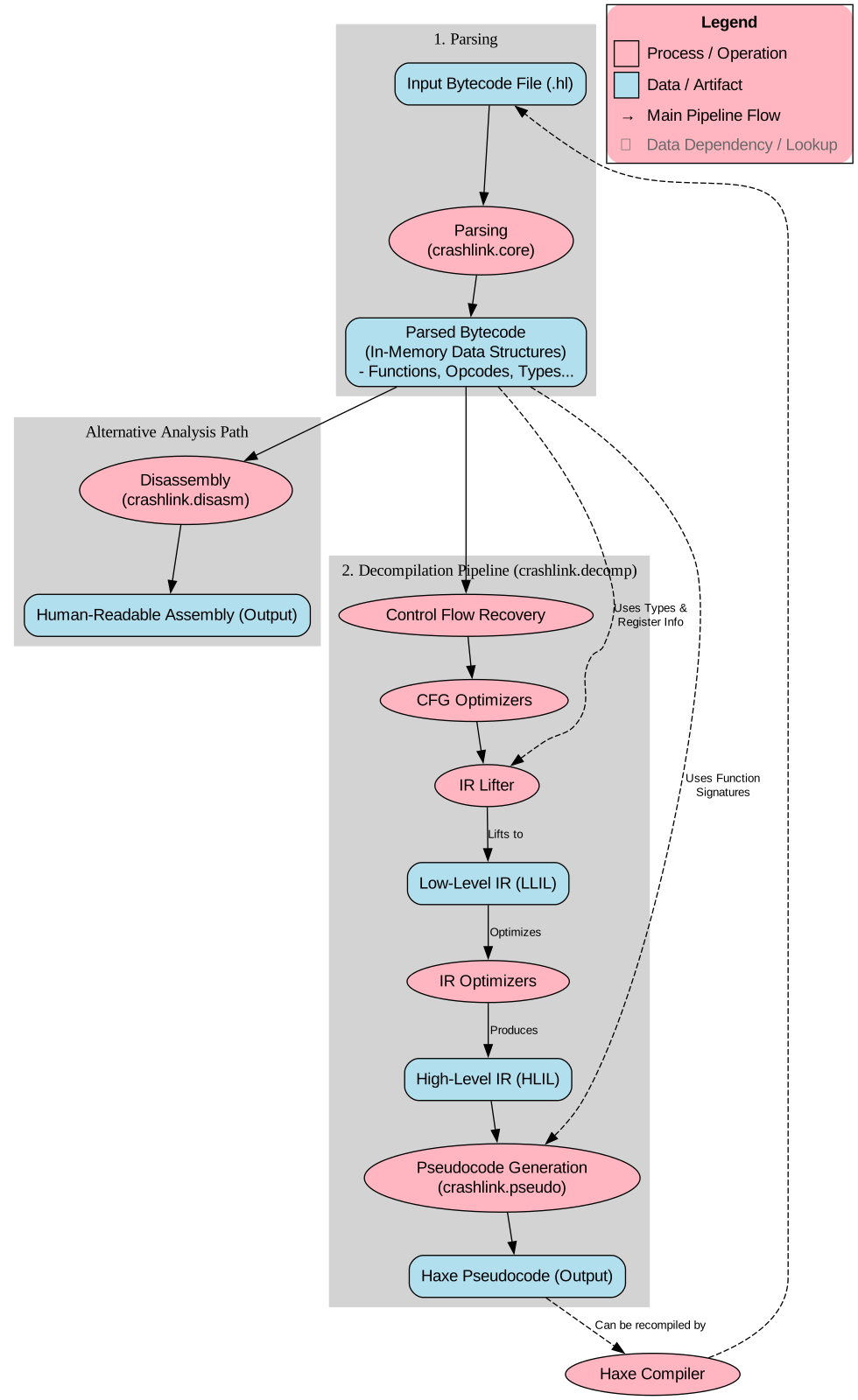
Parsing: Bytecode.deserialise
Everything starts with Bytecode.deserialise, which reads the raw HashLink bytecode format (a HashLink-versioned binary layout of types, functions, natives, globals, and constants) into a Bytecode object. This is a straight parse, no interpretation of what the opcodes mean. Bytecode is also what gets reserialised back to disk when you patch or assemble, so it's the shared in-memory model everything else in the library works against.
Disassembly: disasm
The disasm module turns a Function's raw opcode list into a human-readable listing: register types, one line per opcode with its arguments resolved (jump targets, string refs, type refs) and a plain-English gloss. This is the fn/disasm output you see in the REPL and CLI. It doesn't build any higher-level structure, it's a direct, mechanical translation of what's already in the bytecode.
Decompilation: decomp
The decomp package is where structure gets recovered. It builds a CFGraph (control flow graph) from a function's opcodes, then lifts that into IR (intermediate representation): an object model of statements and expressions instead of flat opcodes and jump targets. A series of IR optimizer passes then run over that IR, resolving locals, folding traces, turning nested if/else chains into switches, and so on, to get closer to what a human would have written. The decompiler is under active development: most functions decompile cleanly, but some complex control flow can still come out imperfect or raise. See Decompiler Internals for how the passes are structured.
Pseudocode: pseudo
The pseudo module walks the optimized IR and emits pseudo-Haxe source text, since HashLink bytecode is very close in shape to Haxe (the language it's normally compiled from). This is the decomp/pseudo REPL output and what decompile/decompfile/class produce on the CLI.
Adjacent subsystems
Two other pieces sit next to this pipeline rather than in it:
- Patching and assembly (
hlrun, the-p/-aCLI flags, and the in-REPLpatch/savecommands): editing bytecode in place or assembling it from crashlink assembly text, then reserialising. See Patching. crashtest: a regression suite that scores the decompiler's pseudocode output against known-good source, used to track decompiler correctness over time. See crashtest.